
 PCS Field Data Collector
 CartoPac Mobile
 Archer 4 Handheld Data Collector
 Shop Online
 Bullhorn Web
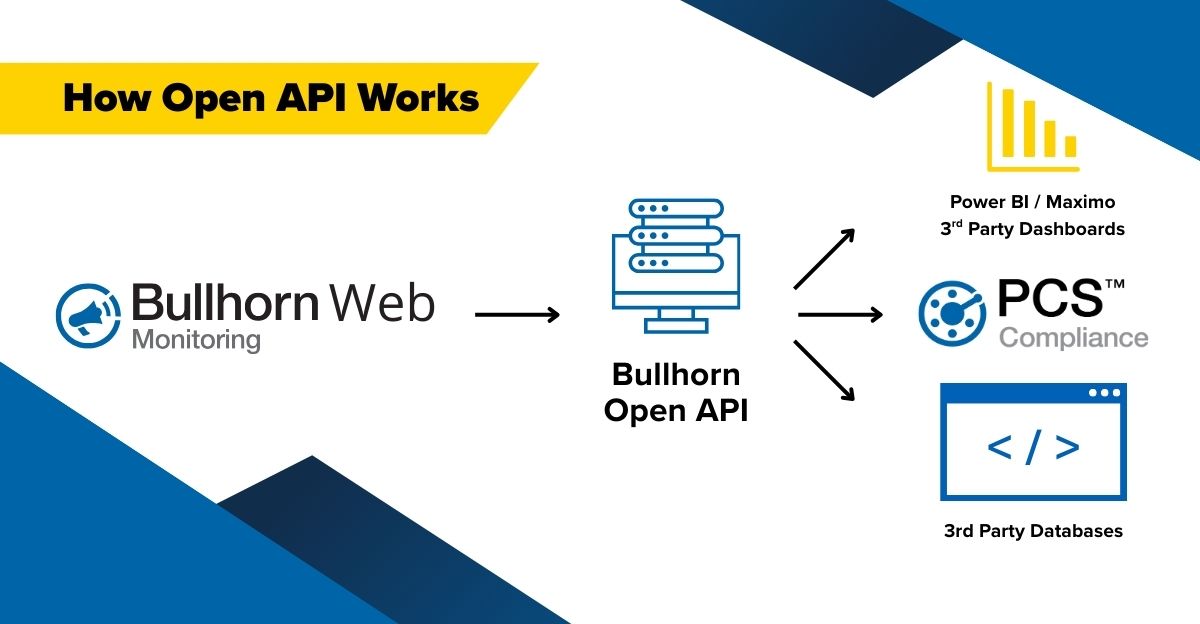
This article is based on a session from our monthly Virtual Brew, where we explored how operators can use the Bullhorn Open API to securely access remote monitoring data, integrate it with internal systems, and support more efficient pipeline compliance and asset management. You can watch or listen to the full webinar here.
Why APIs Matter for Pipeline Integrity
Pipeline integrity teams work with a constant flow of information—from survey data to remote monitoring readings to GIS layers and work orders. But in most organizations, this data lives in disconnected systems. Even when teams know the insights they want, remote monitoring data integration into dashboards, risk models, or maintenance systems can be tedious.
What is Bullhorn Open API
The Bullhorn Open API is designed to streamline that process by giving operators direct, secure access to the data their remote pipeline monitoring data their units collect in Bullhorn Web. Instead of downloading files, cleaning spreadsheets, or relying on brittle custom integrations, the API provides a clean, standardized way to automatically move Bullhorn data into the systems where engineers, analysts, and managers already work.
How an API Works (In Simple Terms)
API stands for “Application Programming Interface,” but the concept is much simpler in practice. Imagine Bullhorn Web as a kitchen where all your data is stored and prepared. An API functions like a waiter: you tell it what you want—specific readings, alarms, units, facilities—and it brings back exactly that, formatted in a predictable way.
Your downstream systems are the customers. They receive exactly the data they request, whether that’s a single measurement or an entire historical dataset. No manual downloads. No uncertainty about how current the information is. Just a clean, secure path from data source to data consumer.
What the Bullhorn Open API Allows You to Do
The API streamlines pipeline monitoring data integration, making Bullhorn data far more flexible and accessible than traditional export-based workflows. Instead of logging into Bullhorn Web to run reports or export files, your systems can pull the data automatically and continuously.
Build unified dashboards across systems and vendors
Pipeline operators can now build dashboards that bring together multiple RMU vendors, giving teams a single operational picture of cathodic protection (CP) performance, alarm activity, and asset health. These dashboards can refresh on a schedule that matches your internal reporting cadence or operate in near real time, depending on how your integrations are configured.
Automate maintenance workflows
The API also opens the door for automated maintenance actions. If a rectifier voltage drops below a threshold or AC current density spikes, your Maximo, SAP, or internal work management system can create a work order programmatically. Instead of relying on someone to review an alarm list manually, the system becomes proactive—surfacing issues and triggering responses as soon as the data indicates a problem.
Enrich GIS with real-time monitoring data
GIS platforms benefit as well. The API allows you to pull location-specific monitoring data into your mapping tools, making it easier to visualize readings geographically, overlay conditions with other spatial layers, and understand system behavior in its physical context. This location intelligence becomes especially valuable for teams incorporating GNSS accuracy, easements, environmental factors, and loading conditions into their decision-making.
Strengthen risk models and predictive analytics
Perhaps the most significant opportunity lies in strengthening risk models and predictive analytics. Many operators use probabilistic methods to understand the likelihood of events based on operational conditions. Bullhorn data—especially from high-frequency AC monitors—captures rich, continuous operational histories. By integrating that data directly into your risk engines or machine learning models, you support more timely, evidence-based decisions and more accurate predictions about where attention is needed next.
Centralize data in internal databases and data lakes
Behind the scenes, organizations that maintain internal databases can bring Bullhorn data into a controlled environment where it can be combined with inspection records, material data, incident histories, and more. This consolidation supports cleaner reporting, more consistent data governance, and more sophisticated analytics without requiring teams to change tools or workflows.
How the API Handles Security and Access
The Bullhorn Open API was designed with the same security expectations used across IT and enterprise data systems. It follows the OpenAPI specification, uses encryption both at rest and in transit, and aligns with SOC 2 best practices.
Access is managed through API credentials—essentially a dedicated username and password pair consisting of a Client ID and Client Secret. Only Bullhorn Web Client Admins can create or manage these credentials, giving your IT and integrity managers clear control over how and where Bullhorn data flows. The API is intentionally one-directional: data flows out of Bullhorn Web but cannot be altered or written back into it.
Getting Started
If you’re a Bullhorn Web Client Admin, you can access the API configuration panel directly within the Admin tab. From there, creating a new credential is a simple process, and once you have that credential pair, your IT team can begin exploring the API documentation and building integrations that match your internal processes.
Most organizations start small—perhaps by pulling readings into a Power BI dashboard—then expand into automated work management or risk-model integrations, like PCS Pipeline Compliance System, as they get comfortable with the workflow.
The Bigger Picture: Moving Toward API-Centric Integrity
Remote monitoring has always been valuable, but accessing that data in a flexible, reliable way has often been the hurdle. The Bullhorn Open API shifts Bullhorn Web from being a standalone destination to being a core data source for pipeline remote monitoring integration, connecting into any system capable of consuming an API.
It supports a broader industry movement toward automation, real-time insights, and risk-based integrity management. And it allows operators to modernize without ripping out their existing software ecosystem.
If you’d like guidance on integrating the Bullhorn Open API or want to explore specific use cases, our support team and product managers are ready to help.