
 PCS Field Data Collector
 CartoPac Mobile
 Archer 4 Handheld Data Collector
 Shop Online
 Bullhorn Web
Field data collection drives pipeline operations, and teams depend on it for surveys, corrosion monitoring, and compliance reporting.
After collection, the handoff from field to office is where time and effort often add up. How data moves, gets reviewed, and lands in your compliance system of record shapes how quickly teams can act. The way data moves from the field to the office often slows things down, creates delays, and introduces extra work.
Improving field data collection often means tightening how data moves after capture so it becomes usable sooner.
Where Field-to-Office Handoffs Slow Down
In most pipeline environments, the process looks straightforward:
- Technicians collect data in the field
- Transfer files when a connection becomes available
- Sync results back to the compliance system or record
- Office teams review and validate
The breakdown happens between these steps.
Data often sits in the field until someone finds a connection. Uploads happen in batches instead of in real time. Office teams may review information hours or even days after it was collected.
By the time someone flags an issue, the technician is no longer on-site. What could have been a quick fix turns into rework.
These delays are easy to miss in a single job, but they add up across surveys, inspections, and datasets.
Why These Delays Create Bigger Problems
A slower workflow delays data and changes how teams operate.
When data takes longer to reach the office, decisions take longer too. Teams lose visibility into what’s happening in the field. Issues surface later than they should.
That creates a ripple effect:
- Technicians revisit sites to fix problems that could have been caught earlier
- Office teams spend more time validating and correcting data
- Reporting timelines stretch out
Over time, this impacts confidence in the data itself. Teams start to question whether what they’re seeing reflects current field conditions.
In pipeline operations, delayed or uncertain data makes compliance proof and day-to-day decisions harder.
Why Better Tools Don’t Always Fix It
Mobile field data collection has improved how teams capture data. Technicians can work digitally, standardize inputs, and avoid manual entry errors.
These tools play an important role in modern pipeline workflows.
But even with strong, secure field data collection tools in place, many teams still rely on the same process after data is collected. They upload data later, move files between systems, and review information after the work is complete.
The tools improved how data is captured. The workflow after capture often stayed the same.
As a result, delays and inefficiencies can still occur between the field and the office.
What High-Performing Teams Do Differently
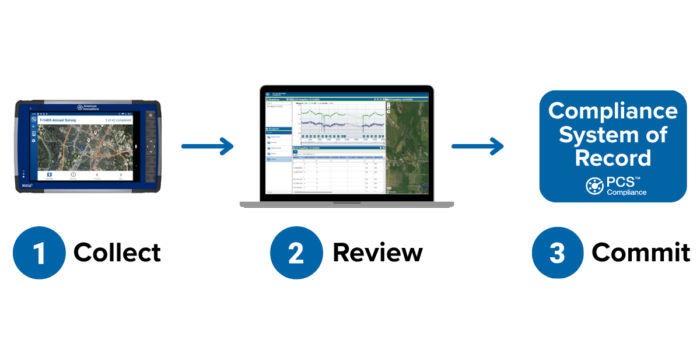
Teams that move faster manage how data flows through the workflow, not only how it is collected.
They shorten the gap between field and office. Data moves faster, and teams review it earlier in the process.
Instead of waiting until the end of the day or later, they look at data while work is still happening. That allows them to catch issues immediately, not after the fact.
They also reduce handoffs. Fewer steps mean fewer delays and fewer chances to miss something.
This doesn’t require a completely new system. It requires a tighter connection between the systems already in place.
Explore how it works in your workflow.
What to Look for in a Better Field Data Collection Workflow
Improving field data collection starts with reducing friction between steps.
Stronger workflows typically:
- Move data from the field to the office in near real time
- Review and validate data before it reaches the compliance system of record
- Reduce manual survey file transfers between the field and office
- Keep field and office teams aligned on the same information
- Track progress from assignment through completion
The goal is a workflow that is easier to manage and more responsive to what is happening in the field, usually by connecting tools you already use.
How This Applies to Pipeline Data Collection
These workflow challenges become more pronounced in pipeline operations, where teams handle large volumes of survey and inspection data.
In areas like cathodic protection data collection, delays between collection and review can slow response times and increase the likelihood of rework.
The same applies to corrosion data collection and other inspection activities. When data doesn’t move efficiently, scheduling, review, and reporting get harder to manage and compliance becomes a risk.
Improving how data moves through the workflow helps teams stay ahead of issues instead of reacting to them later.
Improving the Workflow Without Replacing Your System
Most teams don’t need to replace their tools to improve field data collection. They need to improve how those tools work together.
When the connection between field and office tightens, data becomes available sooner, teams respond faster, and workflows become easier to manage.
PCS Users: See How Survey Manager Fits Your Field-to-Office Workflow
The gap between field and office doesn't have to slow you down.
Sign up for the 30-day Survey Manager Trial Program to see how our secure web platform works with your data and existing PCS and Field Data Collector workflow.